
Next-Gen AI Agents: Why DACH SMEs are underestimating the new cyber risks

For small and medium-sized enterprises (SMEs), this creates significant efficiency gains. However, it also introduces new security dependencies that are not adequately addressed by traditional cybersecurity models.

What is OpenClaw
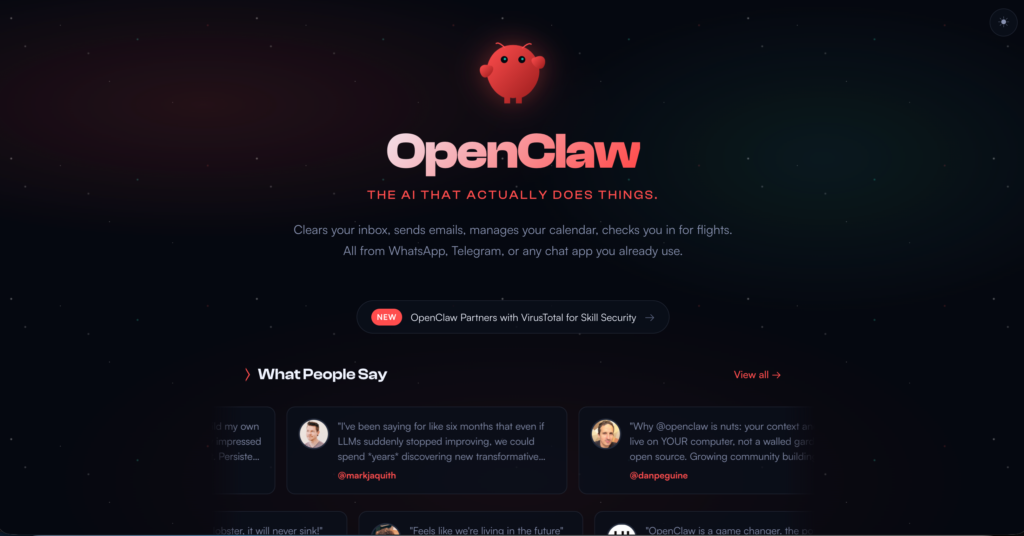
OpenClaw is an emerging AI agent framework designed to integrate LLMs with enterprise applications, APIs, and user interfaces.

Unlike traditional automation scripts, AI agents are not limited to predefined sequences. They operate in a goal-oriented manner:

  • They interpret tasks contextually
  • They dynamically determine execution steps
  • They interact directly with enterprise systems (ERP, CRM, databases)

This represents a shift toward software systems that act as autonomous decision-making entities within defined permission boundaries.

From a security perspective, these agents must be treated as high-privilege, continuously active system actors.

New risk dimensions for SMEs in the DACH region

SMEs in the DACH region face increasing pressure from both operational constraints and regulatory requirements, including GDPR compliance obligations.

AI agents amplify risk in three key areas:

1. Expanded attack surface through system integration

AI agents require broad access to internal systems, increasing the potential impact of credential misuse or indirect manipulation.

2. Data processing beyond traditional control boundaries

Many AI workflows rely on external LLM services, raising compliance questions under GDPR regarding personal and sensitive data handling.

3. Reduced auditability

The autonomous nature of AI agents makes it difficult to fully reconstruct decision paths across extended execution chains.

Why traditional security architectures are insufficient

Conventional cybersecurity models rely on perimeter-based controls such as:

  • network segmentation
  • access control mechanisms
  • signature-based detection
  • rule-based SIEM alerts

These models are primarily designed to detect external threats.

AI agents, however, operate within trusted environments using legitimate permissions, making them significantly harder to detect using traditional approaches.

Managed Detection and Response (MDR) as an adaptive control layer

Managed Detection and Response (MDR) is a security operations model combining continuous monitoring, behavioral analytics, and active incident response.

In AI-agent-driven environments, MDR provides critical capabilities:

1. Behavioral anomaly detection

Continuous profiling of identities, endpoints, and AI agent execution patterns enables detection of deviations from expected behavior.

2. Cross-domain correlation

MDR systems correlate:

  • user identities
  • API interactions
  • AI agent execution logs

to reconstruct complete execution chains.

3. Real-time containment

Upon detection of anomalies, affected agents can be isolated, API tokens revoked, or execution halted to prevent systemic impact.

Regulatory context

In the DACH region, GDPR compliance introduces strict requirements for:

  • data minimization
  • purpose limitation
  • auditability of automated decisions
  • technical and organizational measures (TOMs)

In highly automated environments, continuous monitoring becomes essential for maintaining compliance.

Conclusion

AI agents such as OpenClaw represent a structural shift in enterprise IT: from rule-based automation to autonomous decision-making systems.

For SMEs, this introduces not only efficiency gains but also systemic security and compliance challenges.

AI Alone Is Not Enough: SMEs Still Need Experienced Cybersecurity Teams

strix

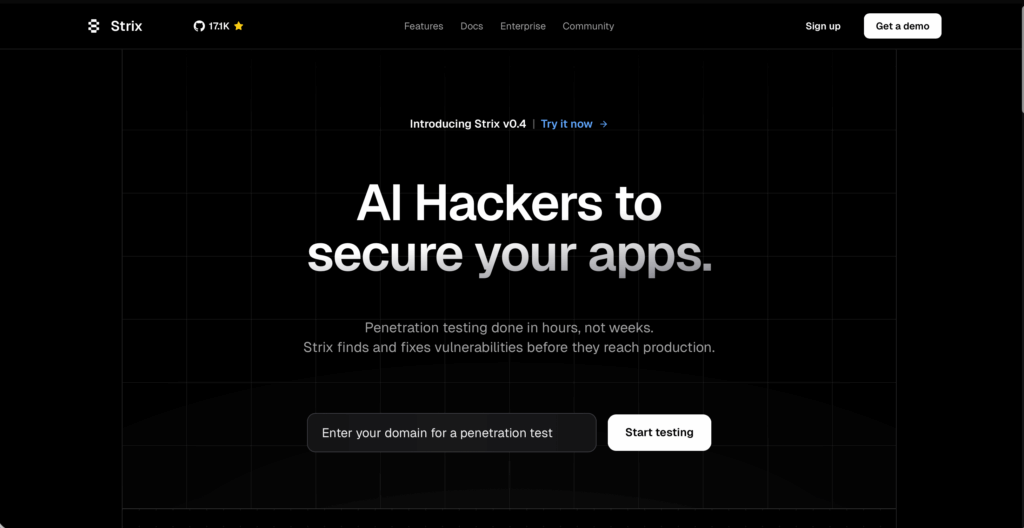
Recently, the open-source project Strix has gained attention in the developer community. It positions itself as an “AI hacker,” capable of running applications, analyzing requests, attempting attack paths, and automatically generating PoCs for vulnerabilities. For development teams, such a tool can speed up vulnerability discovery and reduce early-stage mistakes. 

However, terms like “AI penetration testing” and “no human required” can be misleading. Strix is not a full-fledged autonomous security solution—it is a tool to assist developers, not replace security professionals. 

What Strix Can Do 

Strix is primarily designed for application security testing. Its key capabilities include: 

  • Automated application execution and attack surface exploration 
  • Browser automation, proxy request analysis, and command-line execution tools 
  • Multi-agent collaboration for simulating attacks 
  • Automatic PoC generation with suggested fixes 
  • Integration into CI/CD pipelines 

The Reality: Strix Relies on Large Language Models 

The “intelligence” behind Strix comes from large language models like ChatGPT or Claude. It does not have a dedicated, self-trained security model. 

This creates several limitations: 

  • It cannot independently reason through complex attack chains 
  • Deep business logic vulnerabilities are difficult for it to identify 
  • Vulnerability assessment relies on tool outputs interpreted by LLMs 

In short, Strix is an automation framework that wraps existing security tools with LLM support, not a system capable of fully replacing professional security teams. 

Why the “AI Hacker” Concept Is Overhyped 

  1. Business logic vulnerabilities still need human judgment 
    Many critical flaws stem from process design, not code errors. AI cannot reliably assess real business impact. 
  1. Multi-step attack chains exceed current AI capabilities 
    Real-world attacks often span multiple systems and stages. LLMs are not consistently reliable for this level of reasoning. 
  1. Risk assessment and compliance require human oversight 
    Determining whether a vulnerability impacts DSGVO compliance or other regulations cannot be left to AI alone. 
  1. Tools identify “points” security requires seeing the “whole picture” 
    AI tools detect code-level flaws but cannot address configuration errors, supply chain risks, or privilege misuse. 

Why SMEs in the DACH Region Still Need MDR Services 

While Strix can improve vulnerability detection efficiency, overall enterprise security is far broader. Especially for SMEs in the DACH region, facing strict DSGVO compliance requirements, the areas AI cannot cover include: 

  • 24/7 threat monitoring: attacks may come from networks, endpoints, or cloud services 
  • Incident response: AI can flag anomalies but cannot make decisions or act 
  • Risk assessment: determining which issues require remediation or reporting 
  • Compliance documentation: AI cannot produce audit-ready security reports 

Professional MDR services remain essential, providing full coverage from detection to response. 

How to Use Strix Effectively 

  1. Use Strix during development 
  • Identify common vulnerabilities early 
  • Reduce later-stage remediation costs 
  1. Combine with human review 
  • Assess PoCs for business risk and compliance 
  • Ensure alignment with DSGVO and internal policies 
  1. Integrate into CI/CD pipelines 
  • Catch vulnerabilities before they reach production 
  1. Use as a supplement, not a replacement 
  • Automation accelerates testing, but MDR and security teams provide context, judgment, and coverage. 

Conclusion: AI Speeds Up Work, Humans Are Still Essential 

Strix demonstrates the potential of AI in application security. It automates many basic tasks and helps development teams reduce early-stage risks. However, it is not a “universal AI hacker” and cannot replace professional security expertise. Enterprise security still depends on experience, human judgment, and continuous monitoring. The most effective approach combines AI-powered acceleration, expert analysis, and MDR services. This combination ensures reliable, sustainable security—particularly for SMEs in the DACH region needing to maintain DSGVO compliance. 

Immer up to date!

Abonnieren Sie unseren Newsletter und erhalten Sie wertvolle Branchen-Insights, Produkt-Updates und aktuelle Analysen von ForeNova direkt in Ihr Postfach.

Wir verwenden Brevo als unsere Marketing-Plattform. Indem Sie das Formular absenden, erklären Sie sich einverstanden, dass die von Ihnen angegebenen persönlichen Informationen an Brevo zur Bearbeitung übertragen werden, gemäß den Datenschutzrichtlinien von Brevo.