Cybersecurity Alert Fatigue in Healthcare IT Security Operations

Imagine having a job where you do nothing more than respond to events with no clear resolution. While you are trying to solve one problem, 10 more show up, then 20, and then 30. Cybersecurity teams live with this reality of increasing alert volume, alert fatigue, false alarms, and hundreds of thousands of actual threats entering the hospital network.

A decade after a key AACN Advanced Critical Care article, alarm fatigue remains a concern for researchers, clinicians, and organizations.

“It leads to missed alarms medical errors causing patient deaths, increased workloads, burnout, a drop in job satisfaction, and hinders patient recovery.”

Are you seeing increased cyberattacks against your medical records and other data sources?

Learn about a fresh approach to cybersecurity and a better way to deal with the overwhelming volume of excessive alerts with the NovaMDR offering from the team at  ForeNova!

Click here to schedule a demo with the team at ForeNova today.

How Has Alert Fatigue Affected the Healthcare Industry?
With the increase in cyberattacks and their effects on SecOps resources, hackers know it is only a matter of time before their attack vectors find their targets within a healthcare network. Hackers, like hospitals and medical providers, continue to invest in AI and ML to increase their attack velocity and complexity.

Healthcare providers holding back on investing in AI-defensive tools, additional training, and recruitment of SecOps talent, including skilled security analysts, will quickly expose their applications, medical records, and all IP-enabled medical devices to internal and external hackers.

In healthcare, for example, once a medical provider switched from paper to electronic medical records (EMR), the number of cyberattacks and malicious activities tripled quickly.

This increase in attack vectors, combined with the lack of human capital resources and updated tools powered by artificial intelligence (AI) and machine learning (ML), created an unsustainable work environment for SecOps engineers and other organization members. Alert fatigue continues to impact healthcare organizations.

This constant game of catch-up became the interesting reality security operations engineers face daily. They try to resolve genuine threats while dealing with increasing security alerts that turn out to be false positives. Cyberattacks’ velocity and sheer volume grow daily across every market sector, including healthcare, finance, and government. High-priority alerts mix with low-level alerts as more legacy security systems cannot understand the new alerts, including next-generation malware activity.

Hackers leverage AI to adjust their various attack vectors quickly, alter their destinations, and increase the attack volume within seconds.

AI-defensive tools are essential to stop AI-offensive tools used by hackers.

Impact of Alert Fatigue on Patient Data Protection

A 2023 study found that 62% of healthcare IT staff felt unprepared for rising cybersecurity threats.

Failing to keep pace with AI-enabled cyberattacks against healthcare systems results in data breaches, account takeovers, and even the shutdown of critical emergency room equipment. The increased volume of security incidents is only one part of the problem. Notification fatigue, adjusting alert thresholds, and overall mental health become even more significant challenges for healthcare providers.

Why Are Healthcare Providers a Prime Target for Hackers?

EHRs are valuable to cybercriminals, containing medical records, diagnoses, and billing information. The average cost of a data breach is $10.93 million, making healthcare the most affected industry.

Reports show the value of a health record can be worth as much as $1,000, whereas on the dark web, a credit card number is worth $5 and Social Security numbers are worth $1.”

Ransomware Continues to be a Top Attack Vector

Ransomware is a significant threat to healthcare, making up 54% of cyber incidents per ENISA.”

Alarmingly, nearly half led to data breaches, like the Vice Society attack on the Parisian maternity hospital Pierre Rouquès—Les Bluets. After the hospital refused to pay the ransom, the Vice Society released 150 GB of patient data on the dark web.

What Are the Top Healthcare Cyberattacks in Germany in 2024?

Like others in the EU, German healthcare providers faced a considerable amount of cyberattacks in 2024. These attacks focus on several attack vectors, including phishing, resulting in ransomware malware, attacks on Internet-of-things (IoT) devices, and data exfiltration from EMR systems.

As the medical industry continues investing in digital transformation, including cloud-based applications, fatigue will probably impact its SecOps resources.

Mittelfranken District Hospital

The Mittelfranken District Hospital is one of many victims of hacker attacks. In recent months, there has been a particular increase in attacks on hospitals.

Unknown individuals accessed the IT systems of Middle Franconia District Hospitals and encrypted data. The timeline for restoring systems after the attack is uncertain. As a precaution, all systems have been disconnected. Hospital management promptly informed relevant authorities, including the police and data protection officials.

Wertach clinics in Bobingen and Schwabmünchen

“According to the report, the server systems’ failure severely restricted clinic operations, forcing them to switch to an analog emergency structure. The clinic canceled planned operations, and further cancellations are possible.”

A hacker attacks targeted Reinhardshausen’s Spa Park Clinic.

Hackers attacked Klinik Kurpark’s central data system. The clinic is resolving the issue and maintaining transparent communication with affected parties.

Law enforcement reported that a urological follow-up treatment clinic was “attacked by cybercriminals on August 27th,” disrupting central IT systems. Technicians quickly isolated, checked, and secured the systems and immediately took measures to contain the incident.

Enabling AI and ML for Healthcare SecOps Automation

Alert fatigue continued to impact traditional SecOps within healthcare, resulting in cybersecurity branches. As more healthcare invests in AI SecOps, the more significant the positive impact they have, reducing alert fatigue while blocking more active attacks.

AI SecOps includes several pillars, including:

AI-Powered Threat Detection

AI-driven threat detection relies on machine learning algorithms to analyze network traffic, user behavior, and threat intelligence feeds. This capability allows the AI to learn and differentiate between normal and abnormal activities, improving the accuracy of threat alerts and detecting anomalies sooner to reduce significant breach risks.

Automated Incident Response

Automated incident response allows AI systems to execute predefined playbooks to contain threats. For instance, AI can quarantine infected devices or block malicious IP addresses immediately upon detection. This swift action helps curb the spread of malware and minimize system damage.

Automation of Routine Tasks

AI streamlines routine security tasks by automating patch management, malware scanning, and network monitoring. This process allows human experts to focus on complex issues while ensuring consistent application of basic security measures, lowering the risk of human error.

Increase Security Awareness Training for the User Community

Healthcare workers use email extensively, along with patient portal applications. Extending access to cybersecurity education will help them become more aware of these attacks and understand their impact on the healthcare system by providing security awareness and attack simulation exercises.

Fact: Most importantly, preventing more attacks at the user level reduces the number of alerts SecOps teams must handle.

The Future of Cybersecurity for Healthcare in 2025

2025 for healthcare will be far more than just AI-powered new cybersecurity tools. New US and EU compliance mandates will profoundly impact the healthcare industry.

U.S. lawmakers have introduced two bills, the Healthcare Cybersecurity Act of 2024 and HISAA, to enhance protections for sensitive health data. However, they remain stalled in the legislative process and are not yet law.

Focusing on the Healthcare Mission

Healthcare providers aim to enhance patient outcomes. However, cybersecurity’s increasing complexity diverts focus and resources. Outsourcing cybersecurity functions allows organizations to prioritize care delivery while keeping systems secure.

In 2025, healthcare cybersecurity protection and success depend on leveraging the right partnerships, technologies, and strategies to protect what is essential.

What is the role of Managed Detection and Response (MDR)?

As AI SecOps tools advance in functionality and effectiveness for the healthcare industries, these tools do not configure themselves, nor are they a plug-and-play-and-forget solution.

Healthcare struggling with access to financial capital and SecOps engineering talent look to MDR providers like ForeNova to help.

Why ForeNova?

MDR providers like ForeNova have experience with AI tools, access to global engineering talent, and a proven proactive approach that aligns with healthcare operations requirements and compliance mandates.

The cost is significant for healthcare providers looking to leverage NovaMDR by ForeNova. The ForeNova team understands the financial challenges more healthcare providers face in Germany and continues to develop cost-saving licensing and service models embedded within the NovaMDR offering.

NovaMDR by ForeNova helps organizations phase out legacy security devices, improve their cybersecurity posture, reduce the need to hire additional talent, and enhance overall security response.

Stopping cyberattacks begins with partnering with an MDR provider like ForeNova, which understands the landscape facing German healthcare SecOps engineers experiencing alert fatigue.

Click here to schedule your free demo of NovaMDR today!

More Downtime For Healthcare Providers Thanks to Cyberattacks

Hospital systems now heavily rely on computers, the internet, and electronic medical records (EMRs), creating vulnerabilities. As medical devices become more IP-enabled, especially in trauma centers, operating rooms, and pharmacies, hospital systems will face more cyberattacks, resulting in extended downtime.

ForeNova, a global managed detection and response (MDR) provider, understands the complex world of healthcare providers. It knows how much these businesses need to invest in cybersecurity, including monitoring, automated incident response, and reporting.

Access to qualified talent to help manage the various adaptive controls remains an ongoing problem for healthcare providers.

Hence, the reason the team at ForeNova launched their NovaMDR service!

Interested in learning more about this incredible managed security service?

Click here to schedule a demo with the ForeNova healthcare security team today.

Reasons for a Downtime in Medical Healthcare

Downtime within an automotive company, financial services firm, or higher education institute happens and causes significant pain. However, downtime during a medical procedure, such as open-heart surgery, blood transfusions, or even emergency room triage, can be far more emotionally, financially, and legally impactful.

Predicting what part of the medical environment will become a hacker’s next target is challenging. Many healthcare providers rely on third-party application providers to deliver EMR, ambulance services, and resource scheduling. An attack on these platforms will cause downtime and massive financial losses.

Failing to deploy proper cybersecurity controls exposes healthcare providers within the European Union (EU) and member states like Germany to considerable legal and regulatory consequences for medical service downtime, data compromise, or loss of life.

Hackers using various attack vectors continue to cause extended downtime within the healthcare industry.

These attack vectors include:

  • Ransomware attacks
  • Distributed denial of service attacks (DDOS) against medical platforms, IP-enabled devices, and physical security devices, including cameras, badge readers, and environmental systems
  • Credential hijacking
  • Data exfiltration of medical records
  • Email phishing attacks
  • Business email compromise leading to financial fraud

Healthcare providers facing these and other attack vectors face considerable challenges preventing these from affecting additional core medical services and hospital business operations.

The People Factor

Healthcare employees face considerable stress during a downtown. Many hospital outages force these employees and leadership to go back to manual processes, paper records, and using analog communications to message all the various departments providing services. Employees continuous face this incredible amount of stress often will choose to the medical practice or the industry.

Adding to the complex problem, hospitals and medical providers that face considerable financial losses and lawsuits will be fallback to delaying elective surgeries and layoff staff to help cut costs.

Recovering from a downtime outage takes human capital resources. These resources become even more valuable for the hospital leadership.

How hospital executives response to the downtime along, including show emotional, professional, and financial support for their staff helps create a positive working culture.

Attacks on Third-party Healthcare Provider Platforms

Disruption in care delivery occurs when hospitals become directly attacked and ransomware targets essential third-party providers. The compromise of these critical services can significantly impact patient care.

Hospitals can suffer collateral damage from third-party attacks as cybercriminals use a “hub and spoke” strategy. By breaching a third party’s technology, they gain access to connected healthcare organizations, enabling them to spread malware or ransomware and extract data from multiple entities.

Financial Implications of a Healthcare Downtime

Hospitals are complex systems that require constant monitoring and management to ensure they run smoothly, so they need a high level of uptime to provide optimal patient care.

Unplanned downtimes in today’s digital healthcare setting are a painful reality that can severely impact patient safety, reputation, customer service, and trust.

“Other factors, such as natural disasters, power outages, unstable network connectivity, human error, also can cause these downtimes.”

Whatever the cause, the result is a costly and stressful interruption of dire services.

The average cost of downtime for hospitals is $7,900 per minute. These outages place these critical entities at risk of exposing sensitive data and patient records, leading to loss of revenue and hefty fines for HIPAA noncompliance.

Delays in Care

“Unexpected downtime delayed medical lab test results by about 62%,” according to a study by the National Institute of Health (NIH). Such delays can endanger patients or result in loss of life, highlighting the importance of communication and backup records during outages.

Patient Privacy

Given the increasing prevalence of cybersecurity threats, healthcare facilities must implement robust measures to safeguard against attacks that could jeopardize sensitive patient information.

Regulatory/Compliance Issues

Compromised patient data leads to HIPAA violations and service-level breaches. Downtime that risks patients’ record confidentiality breaches HIPAA regulations, with fines of up to $50,000 per violation.

Reputation and Referrals

EHR downtime delays patient care, leading to wait times longer and decreased patient satisfaction. It can also lower hospital HCAHPS scores and harm their reputation, reducing traffic. Recovering trust post-outage often requires significant marketing efforts and investment.

Staff Productivity

“Hospital and medical office system failures impact employee morale and productivity, costing about $138,200 on average because of lost end-user productivity.”

Cyberattack Effect on Patient Care

Hospitals facing ransomware attacks may experience disruptions in access to electronic health records (EHR) and patient data that last hours, days, or weeks.

Ransomware blocks access to medical records, medical devices, and environmental systems. Hackers extort, steal, and alter medical data at will unless the medical providers pay. Many do not. Some will leverage cyber insurance to help offset the financial losses.

Ensuring Access to Critical Care

Preventing a cyberattack against a healthcare provider’s most critical assets starts with assessing the riskiest systems. Protecting these systems, including environmental controls, operating room equipment, medical dispensary devices, and EHR platforms, must remain the health providers’ highest priority.

Healthcare providers must ensure access to critical care services and platforms have enough built-into resiliency to withstand a cyberattack, power failure, or human error.

More healthcare providers do not have the financial capital to protect 100% of all critical medical systems. Hackers, knowing this, continue to probe these providers, looking for the most vulnerable targets. These targets could be a nurse’s workstation, a doctor’s mobile device, or even an IP-enabled surveillance camera.

Without proper funding, healthcare IT executives continue to triage their enterprise networks, applications, and devices to determine which elements will cause the most impactful downtime.

Healthcare IT executives will perform a business impact analysis (BIA) to determine which systems experiencing downtime will cause financial damage and review the annual cybersecurity costs to protect these assets.

Maintaining Data Integrity

Like financial services, defense, and education, a hacker’s ability to leverage ransomware attacks creates several vulnerable situations. Hackers will extort money from healthcare providers by using malware to encrypt healthcare records, including making good on the threat of manipulating medical data. Healthcare providers have countered this risk with investments in business continuity plans (BCP), disaster recovery capabilities (DR), and backup and restore functionality.

So, hackers then turned their attention to targeting BCP, DR, and backup systems. Regardless of who designed and developed it, even a system has vulnerabilities, including backup systems.

Healthcare providers continue to look for ways to stay ahead of the threat landscape by investing in artificial intelligence (AI), machine learning (ML), and other cybersecurity defensive tools to help protect their data.

Case Study: German Healthcare Provider Attack

This disruption showed that vulnerabilities within healthcare systems leveraging third-party digital connections remain at risk.

“A mis-configured update to CrowdStrike Falcon software triggered a massive IT outage, causing millions of computers to show the “blue screen of death.”

“In Germany, the University Clinic of Schleswig-Holstein canceled elective surgeries, while in Israel, over a dozen hospitals operated manually, rerouting ambulances.”

AI and ML Cybersecurity Defensive Tools: Essential to Healthcare Security

Hospital systems in Germany and other EU member states continue to innovate and modernize their healthcare platforms. This strategy includes moving to EMRs and AI-enabled cybersecurity defensive tools for email security, network detection and response (NDR), and access control.

These AI-powered tools allow healthcare providers to counter similar adversarial AI tools used by hackers. Without these AI-enabled tools, healthcare providers will continue to face lengthy and extensive downtimes, fines, and patient losses.

The Role of a Managed Detection and Response (MDR) Service for Healthcare

Medical providers must invest talent to manage these AI-enabled tools to prevent healthcare downtime. Poorly configured tools or unmanaged security capabilities will lead to cyberattacks.

MDR providers like ForeNova help configure, manage, monitor, and future-proof healthcare provider’s cybersecurity infrastructure. Leveraging the NovaMDR platform, ForeNova brings exceptional EU and global resources to help protect healthcare providers, including several in Germany.

Without a strategy partner like ForeNova, most healthcare providers will face more extended outages, financial losses, and credibility.

Why ForeNova?

ForeNova, with its experience in EU-based healthcare cybersecurity and cost-effective solutions for medical providers, should be your preferred partner for 24/7/365 securing, monitoring, and responding to cyberattacks.

Click here to schedule a demo of their fantastic NovaMDR platform today!

Electronic Health Record Data Protection with MDR

Enabled by the Appointment Service and Supply Act of 2019, this mandate required all German health insurance funds to migrate to an electronic health record system (EHR). EHR systems extend access to policyholders. Policyholders establish access to their records and update the information without notifying the insurance provider.

Protecting EHRs with seamless integration is a highly complex process. Compared to most other countries in the European Union (EU) and the rest of the world, the German health system’s rollout of EHRs faces many headwinds surrounding legal issues, challenges with telematics, and compliance and regulatory mandates.

Securing the data still falls upon the health insurance companies only if the record is an EHR. Most of Germany has a public health system, and less than 10% have private insurance. Connections between various digital health providers and the EHR holder continue to be a work in progress.

EHRs are still a choice. Others we choose to maintain their personal health record, or PHR.

Securing an EHR and a PHR still requires the insurance funds to enable a cross-section of cybersecurity controls to align EU and global compliance regulations, cybersecurity threats, and security gaps. Insurance firms struggling with hiring and keeping security operations talent should consider a managed detection and response (MDR) offering from security providers like ForeNova.

Overview of Electronic Health Records for Germany

Germany’s progression into the world of EHRs for the healthcare sector remains a work in progress. In 2023, there were less than 600,000 EHRs in the country. Part of the challenge with the EHR rollout had to do with patent rights on where they wanted their data stored and who had access.

The challenge continues with the ability of the EHR systems to extend granular access to the medical record based on the criteria set by the data owner. The lack of granularity created negativity towards the initiative.

Many also criticized EHR for the lack of technical standards regarding stability within critical infrastructure, interoperation with other systems, and the ability to support cross-border collaboration with other EU members.

The Office of Health Ministry discovered one challenge within the digital transformation strategy for EHR was the focus on too much technology and less on understanding the consumers of the solution. As part of the enrolling process, the patients were required to grant consent without clearly understanding the entire process. During the rollout of EHR, the health insurance providers offered no incentives for sensitive patients not trusting EHR solutions, thus resulting in a very low enrollment, especially from people who struggle to grasp the security-related questions.

Another issue that raised concerns among many in the German healthcare industry was the lack of public information provided to the patients surrounding how EHRs work and security protection.

Lack of interpretability, low patent turnout, and confusion about cross-border collaboration all resulted in the entire EHR becoming a target for hackers.

What Regulations Govern EHR In Germany?

“The German healthcare system has three levels: legal framework, self-administration, and individual players. Federal, state, and local governments manage the legal framework, with the Federal Ministry of Health overseeing health policy at the federal level.”

Multiple laws establish the digital framework for Germany’s healthcare system, specifically for EHR implementation and healthcare data usage. “The General Data Protection Regulation (GDPR) and Federal Data Protection Act (BDSG) also apply.” The E-Health Act, effective 29 December 2015, lays the foundation for digitalization in this sector.

Compliance with GDPR in EHR Management in Germany

GDPR plays a significant role regarding data ownership and protection for all citizens in Germany. People, not the Federal Ministry, own their data, and by law, they are the ones who extend permission for access.

Germany’s Federal Parliament, the Bundestag, enacted the Patient Data Protection Act (PSDG), which applies to all healthcare institutions—hospitals, doctors, insurers, and pharmacies—using the telematics infrastructure for patient data processing, regardless of organizational size.

Germany’s Federal Commissioner for Data Protection has warned health insurers that PSDG compliance doesn’t exempt them from GDPR. The Federal Health Ministry will ensure that German citizens retain their rights regarding health records under GDPR.

What is OpenEHR in Germany?

In Germany, OpenEHR is an open-standard platform for managing electronic health records (EHRs). It facilitates seamless data exchange among healthcare providers through standardized clinical models. This vendor-neutral approach enhances data interoperability and patient-centric care, which is vital to the country’s digital health infrastructure development.

  • OpenEHR’s goal is to better assist German health insurance providers in rolling out EHRs, leveraging more open-source functions to improve the interoperability between platforms and providers and help promote better cross-border collaboration.
  • OpenEHR employs a dual model approach for Hospital Information Systems, ensuring semantic interoperability and providing a holistic solution for Electronic Healthcare Record systems.
  • “OpenEHR incorporates elements of interoperable, secure EHR software, and its proponents advocate it as the optimal approach for developing hospital information systems.”

There are 50 GDPR requirements and 8 OpenEHR design principles. OpenEHR principles meet 30% (15/50) of GDPR requirements and align with GDPR standards.

Top Security Challenges Protecting EHR in Germany?

Top cybersecurity challenges protecting EHR in Germany include ransomware, phishing, insider threats, data breaches, medical device vulnerabilities, legacy systems, complex data sharing, and healthcare professional awareness. GDPR and other compliance help reduce the risk of cybersecurity attacks against EHR by requiring extensive protection layers, consent, and continuous monitoring.

Fake authorizations between the data owner and the healthcare provider in Germany continue to be a concern. Even with the enablement of a PIN code, fake authorizations continue to cause unforeseen data breaches.

Top EHR Breach in Europe in 2024?

Cybercriminals target healthcare records for the vast personal data they hold, including protected health information, full names, birth dates, and home addresses.

Hackers can easily commit identity theft by accessing healthcare providers’ information and selling it because of its high value. Many healthcare organizations need to switch to digital records more quickly. Although many have already made the switch, some still use old technology and have weak cybersecurity.

Hospital Simone Veil in Cannes, France, 2024

Simone Veil, a regional hospital, manages 150,000 outpatients and 50,000 emergencies annually. Most services continued, but communication and data handling relied on outdated methods. Initially thought to be a ransomware attack, it took weeks for confirmation. On April 30, the hospital revealed the LockBit 3.0 group was behind the extortion attempt.

Hospital Simone Veil declined to pay.

Who Manages Telematics Infrastructure in Germany?

Telematics infrastructure (TI) and healthcare systems must guard against external threats and internal negligence. They must deploy and maintain cybersecurity measures like firewalls, antivirus software, and strong passwords. This mandate also includes preventing the unnecessary local storage of sensitive data and avoiding sharing through unauthorized channels like email or file sharing.

Specifically to EHR, the Federal Ministry of Health owns 51% of TI provider Gematik, which manages the telematics infrastructure, electronic health card, specialized applications, and an interoperability directory while overseeing data security.

Gematik GmbH coordinates its TI applications with the Federal Commissioner for Data Protection and Freedom of Information (BfDI) and the BSI, following the German Social Security Code (SGB).

The Role of MDR in Protecting EHRs

Because of a cybersecurity talent gap, many organizations seek help to hire and keep skilled professionals. Because managing today’s complex cyber threats often requires expertise that is not readily available in-house, this lack of talent has led many businesses to outsource security functions.

Many MDR services tackle cybersecurity challenges. MDR provides external teams with specialized expertise, serving as an outsourced Security Operations Center (SOC). This solution enables organizations to leverage expert security operations without the costs and complexities of developing an internal team. It’s a strategic choice that meets today’s IT security needs, where agility and specialized skills are crucial against advanced threats.

TI providers, healthcare insurance funds, and medical providers in Germany continue to face resource shortages, overlapping and complex compliance mandates, and continuous alterations to the existing German regulatory mandates and new compliance frameworks coming in the current year.

MDR service engagements create opportunities to assist TTIs and health providers with various offerings that align with their business, compliance, and security operations needs.

  • 24/7 continuous monitoring
  • Automated detection and incident response
  • Firewall deployment, management, and future-proof
  • Endpoint security management
  • Compliance reporting
  • Access to Threat Intelligence

Beyond creating the various service offerings, ForeNova’s most important attribute is its people. The company takes pride in staffing experienced security operations engineers to support the complex world of the German healthcare system.

ForeNova also provides world-class cybersecurity security integration advisory services combined with technical offerings. Healthcare and tech companies that still use old technology and methods can use ForeNova’s consulting team to improve their cybersecurity. This helps them move from reacting to problems to preventing them.

Why ForeNova?

One key element that separates one MDR provided from another is experience. MDR providers that support every vertical market are more of a one-size-fits-all model. ForeNova’s unique ability to create an MDR engagement tailors it explicitly to their clients’ needs.

Want to see a demo of this incredible MDR offering? Click here to schedule a session with the ForeNova engineering team today!

Effective Cybersecurity Strategies for Healthcare Institutions

Recent statements by the United Nations Surgeon General to the Security Council have raised concerns about the current state of cybersecurity in hospitals. He stated that ransomware attacks against hospitals and health systems could be “a matter of life and death” and pose a serious threat to international security. Several delegates called for international cooperation to address one of today’s most destructive cyber threats. According to IBM’s Cost of a Data Breach 2024 Report, the healthcare industry has topped the list of the most expensive industries to recover from a data breach for 14 consecutive years, with an average cost of $9.77 million. These are signs that hospitals need to implement a comprehensive cybersecurity strategy and continually improve the security awareness and technical skills of their staff to meet these ever-emerging challenges.

Major Cyber Threats to Modern Hospitals

Ransomware

Ransomware is a type of malware in which an attacker blocks access to a device and its stored data by encrypting files and then demands a ransom from the organization in exchange for decryption. Ransomware attacks in healthcare are one of the most common cyberattacks that not only affect the normal operations of hospitals but can also jeopardize patient safety. Ransomware attacks in healthcare rise from 60% in 2023 to 67% in 2024. And according to Microsoft’s latest annual Digital Defense Report, July 2023 through June 2024 (Microsoft fiscal year 2024), 389 healthcare organizations in the U.S. suffered from ransomware attacks that resulted in network shutdowns, systems going offline, delays in critical medical procedures, and rescheduling of appointments, among other consequences.

Data Breach

Healthcare data systems often contain a large amount of sensitive information within them, including patients’ personal health information (PHI), financial data, medical records, and more. Once this data is compromised, it can lead to serious privacy violations and identity theft.

There is no denying that digital record-keeping has many advantages over traditional paper-based methods of retention. While technology has evolved, hospitals have reduced the potential for system intrusion, unauthorized data access, and disclosure by adopting and more accurately tracking electronic devices, as well as more widespread use of data encryption. However, the ever-increasing number of hacking incidents has led to a continued upward trend in the number of data breaches occurring over the past 14 years. And we can see that the number of data breaches is not only increasing but getting worse.

Social Engineering Attack

Attacks in which the attacker obtains sensitive information through deception, such as phishing and phone impersonation, may also pose as a trusted entity to trick hospital staff into providing login credentials or other sensitive data. Technically speaking, social engineering is not an attack technique, it is more of a “trick,” and because it focuses on people’s psychology and behavior, it has a very high success rate—after all, everyone can make a mistake, and people are the most vulnerable part of security measures. Although the victim will usually doubt the authenticity of the email or phone call, because the attacker carefully designed a complete attack process, so often people will make the wrong judgment and disposition.

Impact and Consequences of Cybersecurity Threats on Hospitals

Data Breach

Internal healthcare systems contain a lot of sensitive personal information, and any inappropriate access to these systems puts the privacy of patients and healthcare workers at risk.

Service disruptions

Hospital cyberattacks can cause emergency systems to crash, affecting the timely treatment of emergency patients, as well as compromising appointment systems and exam equipment, forcing appointments and exams to be postponed and affecting patients’ treatment plans.

Financial losses

Ransom payments and post-data recovery and maintenance costs.

Reputational damage

A sustained cybersecurity incident can diminish the public’s perception of the hospital’s credibility, and relationships between some partners may be impacted.

Legal Liability

Hospitals can face stiff fines and lawsuits for data breaches and are required to comply with relevant data protection regulations; for example, in Germany, healthcare organizations must comply with HIPAA, GDPR, Nis2, and the German Patient Data Protection Act (PSDG), and any breaches can lead to lengthy compliance reviews and corrective actions.

Why Hospitals Are High-Frequency Targets for Cyberattacks

Massive amounts of sensitive data

For hackers, hospital systems store large amounts of sensitive information of great value, including patients’ names, addresses, social security numbers, medical history, diagnostic information (HPI), and more. Whether it’s obtained illegally and sold on the dark web or ransomed to hospitals for a high ransom, the healthcare industry is increasingly becoming a target for attack.

Aging IT systems

Hospital IT systems handle large amounts of sensitive information, yet due to a lack of up-to-date security patches and updates, older IT systems are susceptible to cyberattacks and virus infections. In addition, these old systems are not compatible with modern and emerging cybersecurity tools or technologies.

IT staff challenge and inadequate training

Unlike Internet companies or manufacturing industries with specialized IT teams, hospitals typically lack specialized, qualified IT talent, making it difficult to respond to increasingly complex cybersecurity threats. And with hospital staff scrambling to save lives, budget, resource, and time constraints mean that all healthcare professionals are unlikely to be well versed in cybersecurity best practices. As a result, awareness and training on cybersecurity are not sufficient, and phishing emails may be accessed inadvertently or compromised by malware, which is a major reason why hospitals are becoming targets of cyberattacks.

Unwilling compromises fuel attacks on hospitals

When facing cyber extortion, some hospitals choose to pay the ransom to recover their systems and data as soon as possible. Indeed, this practice can solve the problem temporarily, but it neglects the long-term network security construction, and the system still has vulnerabilities and risks. Most importantly, this practice sends a signal to hackers that “ransom works,” which undoubtedly encourages the emergence of more similar attacks. And hospitals may also be classified as ‘soft targets’ by hackers after a compromise, thus becoming one of the main targets for future attacks.

Medical Device Networking

Today’s vast network of connected medical devices significantly improves the efficiency and quality of healthcare delivery, as these devices not only monitor a patient’s health status in real time but can also be controlled and adjusted remotely. Yet this connectivity also poses significant challenges. For example, patient information stored on medical devices can be accessed without authorization, and these devices can be remotely accessed and controlled by attackers who can even tamper with the transmitted data.

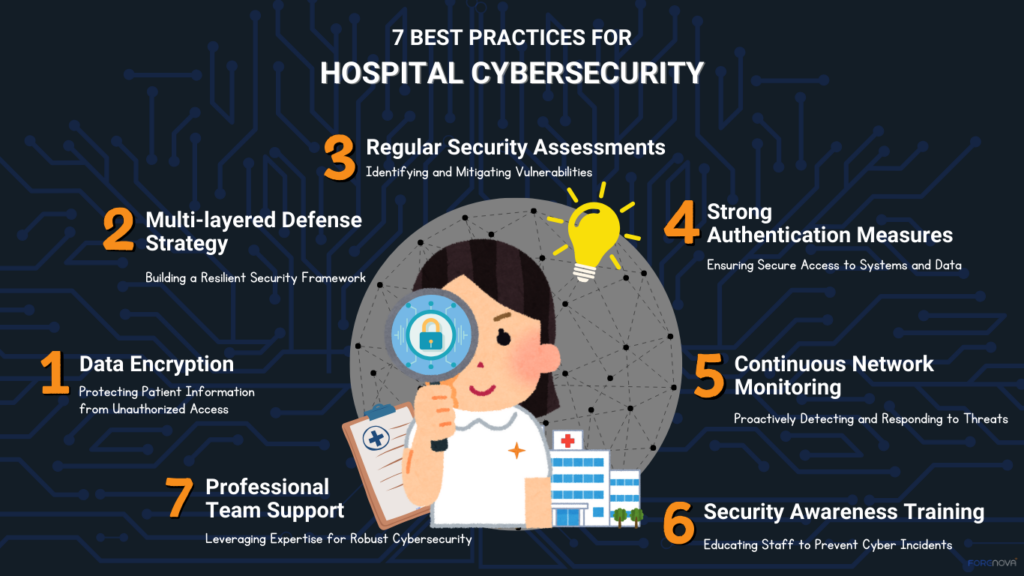
Best Practices for Hospital Cybersecurity

  1. Data Encryption: To better protect against data interception and tampering during transmission, hospitals should ensure that all data is encrypted during transmission.
  2. Multi-layered defense strategy: Hospitals should establish a defense-in-depth strategy that includes the use of multi-layered security controls such as firewalls, intrusion detection systems, and encryption to comprehensively protect hospital network security.
  3. Regular Security Assessments: Hospitals should conduct regular security assessments to identify and fix vulnerabilities and potential risks in their networks.
  4. Strong Authentication Measures: Use Multi-Factor Authentication (MFA) to improve system security by ensuring that only authorized personnel have access to sensitive information.
  5. Continuous Network Monitoring: Continuously monitors network traffic, detects and responds to suspicious activity in real time, ensuring that security threats are detected and addressed in a timely manner.
  6. Security Awareness Training: Hospitals should conduct regular security awareness training for their staff to prevent security accidents due to human error and to improve the overall security preparedness.
  7. Professional team support: Hospitals should remain sensitive to emerging technologies and introduce new security tools and solutions like NovaMDR in a timely manner to continuously improve their network protection capabilities.
cybersecurity for healthcare 7 best practices

Cybersecurity is not static but needs to be constantly improved and updated to address the changing threat landscape. ForeNova team has a wealth of experience and expertise in the field of cybersecurity, and we are able to customize cybersecurity strategies that are best suited to the specific needs of different hospitals. And NovaMDR can provide healthcare organizations with 7×24 comprehensive cybersecurity solutions and compliance guidance to ensure that hospitals comply with various regulations while protecting sensitive data and systems.

Contact our team of professionals today and start protecting your organization from cyber threats today.

KRITIS Requirements vs. B3S Standards for Healthcare Providers in Germany

“Like other vital public services in Germany, including water and electricity, the German government classified hospitals as critical infrastructure or KRITIS.”

The German government deemed all hospitals treating over 30,000 cases annually as critical infrastructure supporting German citizens. All KRITIS-designated hospitals were required to update their IT security by the end of 2021.

By 2021, all hospitals in Germany must meet and exceed cybersecurity standards set forth by the BSI in response to increases in attacks during the global pandemic. BSI created a new industry standard – B3S. This new method incorporated 168 standards. All hospitals, regardless of size in Germany, are required to meet B3S standards.

A significant portion of B3S standards includes monitoring, incident response, and reporting. To meet these requirements, hospitals either staff their security operations or outsource to a managed detection and response like a Nova MDR solution from ForeNova.

What are the KRITIS Requirements for Hospitals?

Hospitals that fall under the KRITIS designation should leverage the ISO 27000 framework to help meet several critical mandates, including the enablement of proper security controls defined by the BSI.

These BSI-mandated controls include:

  • Enablement of detection and response capabilities
  • Cybersecurity breach reporting to the BSI within 72 hours of the event
  • Deployment of an Information Security Management System (ISMS)
  • 24×7 security operations capability to handle all incident responses

Here are other critical components hospitals need to execute for KRITIS:

Registration with BSI

KRITIS operators must register with the BSI and provide a primary contact for compliance, cybersecurity, and breach notifications.

Implementation of Security Measures and Intrusion Detection Systems

KRITIS hospitals must enable and sustain all adaptive controls, processes, and procedures necessary to safeguard IT systems against cyberattacks, adhering to BSI’s minimum standards.

Reporting Mandates and Information Sharing With the BSI

KRITIS operators must report major IT incidents to the BSI within 72 hours and provide necessary details for incident management. All KRITIS hospitals must also share relevant information with other hospitals and BSI authorities.

The KRITIS-designated hospital needs to develop and deploy a comprehensive disaster recovery plan to include:

  • Business impact analysis (BIA)
  • Business continuity management
  • Business continuity plan
  • Recovery time objectives

Aligning KRITIS, ISMS, B3S, and ISO 270001

The BSI mandates that KRITIS hospitals deploy and sustain an ISMS that aligns with ISO 27001 standards.

The ISMS follows four principles defined within ISO 27001: plan, implement, control, and optimize. It establishes an independent structure for improving IT security, including central roles like an IT security officer and risk analysis to identify vulnerabilities.

KRITIS hospitals need to provide evidence specifically around their risk management program, proof of monitoring, demonstrate compliance, audit management, and other elements from the B3S.

These hospitals must hire external auditors and report their findings to the BSI every two years.

Understanding B3S Standards

The B3S features 168 standards for resilient IT and patient care. These standards become categorized as must, should, and optional requirements.

The standards become broken out into five categories:

  • Interoperability: Securing data access across multiple platforms
  • Data security: Enabling encryption across all data sources
  • Privacy: Meeting all privacy mandates
  • Consent Management: Enabling patent consent systems
  • Data quality: Sustain all data’s integrity, confidentiality, and availability.

Hospitals in Germany that have already implemented ISO 27001 and an ISMS are the most prepared to meet BSI and IT-SIG 2.0 security act requirements.

Key Differences Between KRITIS and B3S

KRITIS is simply a designator for a hospital based on the number of cases to enable “state-of-the-art” cybersecurity capabilities that align with BSI directives. The KRITIS directive also states that the hospital needs to deploy an ISMS system aligned with the ISO 270001 framework. B3S provides additional standards hospitals need to enable to become compliant with BSI directives.

B3S Impact on Smaller Hospitals

Smaller hospitals not classified under KRITIS have a crucial deadline of January 1, 2022, to ensure their IT security meets state-of-the-art standards. The Social Code (SGB V) § 75c introduces new IT security regulations for hospitals aligned with BSI law, effective January 1, 2022. From this date, all hospitals must adhere to strict KRITIS IT security requirements, regardless of size.

  • “Starting in January 2022, small hospitals must introduce electronic patient records (ePA), digital referrals, and e-prescriptions.”
  • These changes will raise challenges in storing and managing patient data, a common target of cyberattacks. They must implement suitable data processing systems while adhering to strict data protection guidelines.
  • KRITIS hospitals must provide evidence to the BSI, but small hospitals have no such requirement under Section 75c SGB V or the PDSG.
  • “In October 2020, Germany enacted the Patient Data Protection Act (PDSG), which affects all hospitals and refers to IT security.”

Preparing For an Attack Requires a Preventive Mindset

Aligning with B3S standards for IT security measures is crucial for compliance because most incidents lead to data protection breaches. These breaches can occur because of cyberattacks or mishandling of personal data.

  • A common breach involves inadequate role and authorization systems for patient data; for example, a hospital in The Hague was fined 460,000 euros for allowing all employees access to patient records without proper authorization.
  • Similarly, a Portuguese hospital was fined 400,000 euros in 2018 for the same issue.
  • The German States Rhineland-Palatinate also fined a hospital 105,000 euros for multiple data protection violations related to patient admissions.

Funding Availability for Hospitals

“From 2019 to 2024, 500 million euros per year—totaling four billion euros—will be allocated to meet KRITIS requirements for large hospitals. Additionally, 4.3 billion euros are available via the Hospital Future Fund for smaller hospitals, with funding applications open until December 2021.”

Operators must invest at least 15 percent of their funds in IT security improvements.

What is the Importance of IT-SIG 2.0 with German Healthcare Facilities?

IT-SIG 2.0, the German IT Security Act 2.0, is essential for healthcare facilities as it mandates stricter cybersecurity for critical infrastructure, including hospitals. This regulation ensures the protection of sensitive patient data and the availability of medical systems against cyberattacks, which could disrupt patient care and endanger lives. It compels healthcare facilities to prioritize strong cybersecurity practices for operational resilience.

IT-SIG 2.0 also plays a critical role in mandating hospitals implement required adaptive controls, including intrusion detection, or face considerable fines. This mandate also provides additional security requirements for hospitals by creating additional reporting and data protection in alignment with GDPR.

Stricter Compliance Requirements

IT-SIG 2.0 mandates hospitals to implement necessary adaptive controls like intrusion detection or risk significant fines.

Protection of Patient Data

IT-SIG 2.0 enforces strong cybersecurity to protect sensitive patient records from unauthorized access or breaches.

Operational Continuity

The act seeks to ensure IT systems’ resilience against cyberattacks, minimize downtime, and maintain access to patient data in critical healthcare services.

Increased Accountability

Healthcare facilities must show compliance with IT-SIG 2.0 regulations, facing penalties for non-compliance.

Note: Companies should leverage Security Information Event Management (SIEM) for attack detection, case management, and playbook distribution to meet IT-SIG 2.0 security operations requirements, which include continuous monitoring, incident response, and compliance notification reporting.

The Role of MDR In Assisting Hospitals With KRITIS and B3S Compliance Mandates?

KRITIS and non-KRITIS healthcare providers struggling with staffing shortages will benefit from a partnership with an MDR provider like ForeNova. MDR helps health providers regardless of size. All healthcare providers must monitor their various security controls, protecting their digital assets, patient information, and employee data.

Here are some essential points regarding the value of MDR and B3S:

  • B3S standards for healthcare require security monitoring of all healthcare-related applications, networks, devices, databases, and portals.
  • Healthcare providers required under IT-SIG 2.0 must ensure proper intrusion detection and security operations, continuous monitoring, and reporting are operational 24/7.
  • As defined within B3S, it mandates that all hospitals have incident response plans and processes for responding to all cybersecurity events, including data breaches.

Conclusion

Ultimately, hacks in healthcare endanger lives and civic society. Minimum IT security standards, such as the KRITIS requirements, can help improve hospital security. Facility operators must follow these guidelines to ensure long-term protection against threats. The primary purpose is to keep cyber attacks from affecting hospital operations.

ForeNova, an EU-based MDR supplier, knows the complexities of healthcare compliance. All health providers, including hospitals, face overlapping mandates, redundant security controls, and cost overruns. These hospitals struggle to save security operations costs while maintaining BSI, IT-SIG 2.0, and KRITIS compliance. Staying current with B3S’s continual developments will benefit greatly from having a relationship with ForeNova.

How German Healthcare Facilities Overcome IT Staffing Challenges with MDR Solutions

German healthcare sector providers having to cope with a shortage of qualified security operations (SecOpS) talent could not have happened at a worse time.

Like the United States, the German healthcare system continuously focuses on medical digital transformation projects, including increased deployment of electronic medical records (EMR), telemedicine, and extended insurance company access to sensitive data. These transformations will help modernize hospitals, patient care, clinics, and other medical-related services.

However, this modernization also creates more cybersecurity vulnerabilities and air gaps. With these new digital health technologies, the entire healthcare German market will face additional complex cyberattacks and increased attack velocities. A shortage of security talent will hinder the ability of these transformations to become fully operational.

Healthcare institutions in Germany, facing IT staffing shortages, are looking towards managed detection and response (MDR) providers to help with staffing and security operations coverage. ForeNova provides staff augmenting resources, 24/7 coverage, and automated incident response capabilities to help meet German healthcare compliance requirements and response to attacks.

Are you a healthcare provider seeking a solution for IT staff shortages? Click here to schedule an initial consultation with the ForeNova healthcare security team today!

What are the Immediate Benefits German Healthcare Providers Receive from MDR?

German healthcare providers who want to strengthen their security, reduce costs, and prepare for cyberattacks will immediately see positive results from leveraging an MDR service.

These benefits include:

Access to Advanced Cybersecurity Tools

MDR providers invest in the latest advanced technologies for endpoint security, security event information management (SIEM), and incident response automation functionality. Healthcare providers lacking SecOps engineer talent to test, evaluate, and support these tools will gain access to them as they become available through the MDR service offerings.

Scaling up Automated Incident Resources

Managed security service providers (MSSP) and MDR providers have access to global resource talent, extending their ability to scale up their cloud-based services to handle far more incident response events than most small-medium-enterprise (SME) healthcare providers. This benefit helps reduce operational costs and increase SecOps efficiencies by leveraging proven experts in SecOps from ForeNova.

Phase-out legacy on-premises security products

Healthcare organizations have various cybersecurity protection layers across their network, cloud, mobile devices, and hospital equipment. Healthcare providers implement many layers as a stopgap to protect a specific network segment, medical service application, medical devices within the operating room, or automated pharmacy dispensers.

The hospital’s cost for sustaining these standalone security layers, including hiring security engineers with the experience to manage them, continues to increase yearly. When acquiring these solutions, the hospital opted for long-term, perpetual license agreements instead of subscription-based models. Despite many outdated or technically obsolete devices, the hospital had to renew its maintenance contracts.

Many of these tools came with various medical devices or applications. They also added a layer of duplication for security protection, making the security operations far more complicated and expensive.

Moving forward with an MDR offering from ForeNova allows the health organization to phase out expensive and less effective cybersecurity tools.

Greater Access to Threat Intelligence Data

MDR providers can access more security telemetry information than most German health organizations. ForeNova collects and learns from the telemetry information by processing data through its large language models (LLM) within its artificial intelligence (AI) and machine learning (ML) engines. Combined with threat intelligence, these engines optimize ForeNova’s MDR automated incident response capabilities.

Other MDR offerings charge their clients for access to the Threat Intelligence data. ForeNova understands the financial challenges SMEs in German healthcare face. The company supports many SMEs with its pricing model, which includes bundling several services under one price point.

More Robust Support for NIS, Patient Data Protection (PDSG), and GDPR Compliance

Like the U.S., Germany’s healthcare industry has several compliance mandates that must be completed and sustained. These mandates, including NIS2GDPR, and PDSG, all require similar cybersecurity protection layers, continuous monitoring, automated incident response, robust reporting and notification, and enablement of the cybersecurity adaptive controls commonly available throughout the German health service.

MDR helps German health providers meet their compliance requirements.

Reduce Downtown and Operational Disruptions

Another critical benefit healthcare providers gain from leveraging MDR is the reduction of downtown and production system effects caused by a cyberattack.

MDR providers also support their clients as security architecture and solutions recommendations specialists. Integrated health organizations are extending their supply chain, adding Internet-of-Things (IoT) medical devices, or expanding the ability for doctors to access response services at a remote clinic remotely. With the constant change in the global threat landscape, hackers can breach these new medical business operations after deployment. MDR providers can make recommendations and assist in the implementation before the new medical functions become operational.

This decision helps the German medical provider reduce the downtown of the various digital assets, patient record systems, and operating room equipment.

Challenges When Enabling MDR Solutions

MDR offers considerable benefits, including reducing cyber threats through proactive threat hunting, reducing alert fatigue of their current staff, and leveraging advanced analytics for faster incident response.

Yet, even with these success factors, enabling MDR capabilities is challenging.

MDR is a subscription service that requires the German medical firm to contract with a provider like ForeNova to leverage its services. SME medical providers may need more money to use this cybersecurity service. Another challenge is resistance to change. Members of the existing internal IT and security teams recognize that outsourcing their daily functions could affect their job status. This resistance element often prevents many outsourced cybersecurity services from becoming fully functional.

Another challenge with MDR offerings is working with legacy security tools. Legacy email security tools, endpoint solutions, and log collection functions may have capability issues with the MDR solution.

A critical part of the MDR journey mandates that the healthcare provider and the MDR service providers collaborate to conduct pre-deployment assessments and decide which existing security solutions should be replaced or moved to the out-of-scope bucket.

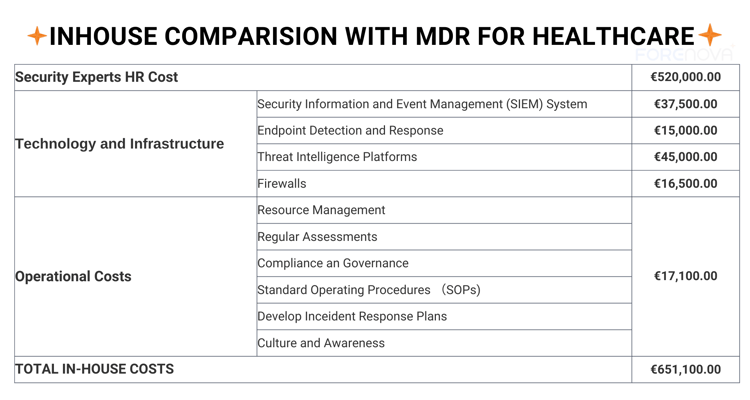
What is the cost of MDR compared to staffing in in-house SecOps?

Healthcare providers moving from an in-house security operations center to an MDR provider extends several cost savings opportunities.

  • Phasing out existing cybersecurity solutions and canceling unused subscriptions.
  • Recreating updated security policies and phasing out obsolete IT and security operations procedures.
  • Re-purposing internal IT and cybersecurity resources for more strategic roles.
  • There is no immediate need to update existing security infrastructure if these controls become part of the MDR offering.

Here is an example of a cost-savings model German healthcare providers can use as a financial guideline:

Inhouse Comparision With MDR For Healthcare-3

Considerations

German healthcare providers evaluating an MDR service compared to their current in-house SecOps strategy need to consider:

  • The cost of security engineers and the availability of experienced talent will always be a challenge.
  • Healthcare providers will need to invest in continuous updates of new cybersecurity technology, training, and double pay for a few months while the legacy solutions are replaced.
  • Healthcare organizations must invest in continuous updates of new cybersecurity technology and training and pay double for a few months while they replace legacy solutions.
  • Healthcare providers will need to continue investing in engineering talent training and development and taking further steps to ensure these trained resources remain with the organization.

What Efficiencies Will Healthcare Providers Gain By Leveraging MDR Services?

Choosing to leverage an MDR offering delivers exceptional efficiencies for a health organization. These efficiencies represent a short list available for healthcare providers:

  • Develop and sustain consistency in SecOps procedures and the ability to respond to sophisticated cyberattacks.
  • Sustain a high-security posture status consistently.
  • Remain a high state compliance readiness throughout the business year.
  • Reduce the security operations to a predictable level with a fixed expense.
  • The ability to scale up cybersecurity resources with high accuracy.
  • Reduction of capital expenditures for security infrastructure
  • Gain peace of mind regarding cyber response, compliance readiness, and reporting.

What Components Comprise an MDR Offering?

MDR offerings leverage several technology controls, coverage models, and engagements. Most MDR offerings focus on the core services, including:

  • 24 x 7 monitoring
  • Automated incident response
  • Reporting for compliance notifications
  • Threat modeling
  • Access to Threat Intelligence

Additional services available for German health organizations include:

  • Staff augment to support existing internal SecOps
  • Enable endpoint security solutions

Why ForeNova?

Working with an experienced MDR provider like ForeNova is critical for all German Healthcare organizations that must address staffing challenges, meet compliance deadlines, and respond to more cyberattacks. ForeNova’s expertise in MDR services, along with its security architecture background, makes it an invaluable partner for the health sector in Germany and the rest of the EU.

Click here to schedule your first demonstration today with the ForeNova team

Immer up to date!

Abonnieren Sie unseren Newsletter und erhalten Sie wertvolle Branchen-Insights, Produkt-Updates und aktuelle Analysen von ForeNova direkt in Ihr Postfach.

Wir verwenden Brevo als unsere Marketing-Plattform. Indem Sie das Formular absenden, erklären Sie sich einverstanden, dass die von Ihnen angegebenen persönlichen Informationen an Brevo zur Bearbeitung übertragen werden, gemäß den Datenschutzrichtlinien von Brevo.