What is Infostealer Malware? 

Infostealers are a type of malicious software (malware) designed to infiltrate computer systems and steal sensitive information. They collect various types of data that are used by cybercriminals to gain access to restricted data, such as 

  • Login credentials 
  • Bank/Card information 
  • Personal data (home address, security number, phone number, etc.) 
  • Browser history data and cookies information 
  • Crypto wallets and keys 
  • Device-specific details (OS name, version, IP, installed software, etc.) 

Infostealers are the most frequent type of attack in 2025 

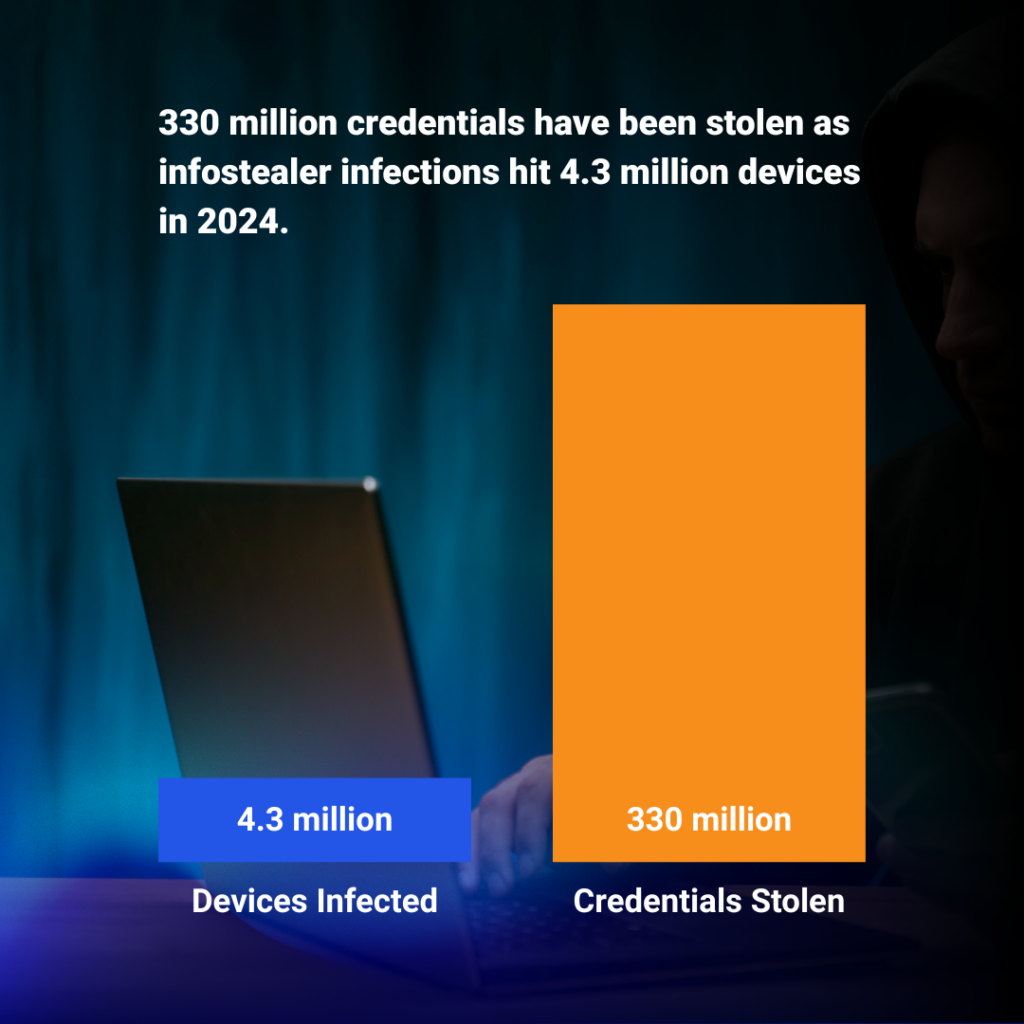
In 2024, infostealer malware infected approximately 4.3 million devices, compromising around 3.9 billion credentials, including passwords and other sensitive data. 
  1. Malware-as-a-Service on the rise 

Underground forums represent a great source for potential hackers with minimal technical expertise to purchase this type of service (malware-as-a-service). 

  1. The rise in cryptocurrency adoption 

As the acceptance of cryptocurrency expands globally, hackers stand to gain significant returns on investment by obtaining wallet/key information. 

  1. Remote workforce & more online accounts than ever 

People manage more online accounts and digital assets than ever before, and with more employees working from home on potentially less secure networks, it creates the perfect storm conditions for hackers to exploit. 

How do Infostealers get in? 

1. The classic bait and switch with phishing attackers distributing malicious payloads through deceptive communications. 

These often take the form of malicious document attachments that exploit application vulnerabilities when opened. They also employ links directing users to credential harvesting sites or malware downloads disguised as legitimate resources.  

2. Compromised Websites  

Hackers can unknowingly distribute malware on regular websites. Some attacks automatically download malicious files when you simply visit an infected site. 

Harmful ads placed on legitimate websites can redirect visitors to dangerous content. Software downloads may contain hidden malware alongside the intended program. 

3. Social Engineering  

Criminals may pretend to be technical support staff to convince victims to grant them remote access to computers. Deceptive messages on social media platforms exploit existing relationships to spread malicious links. Public QR codes can also lead individuals to risky websites. 

4. Trojan Horse in Supply Chain  

Attackers often target the software development and distribution process, which may alter legitimate software updates to include malicious code. Many applications’ development libraries and components are also susceptible to compromise. 

Most popular Infostealer variants 

RedLine Stealer 

RedLine Stealer was frequently cited as one of the most dominant infostealers throughout 2023 and 2024. One report indicated it was responsible for 43% of observed infostealer infections in 2024. It targets credentials, cookies, credit card details, FTP clients, cryptocurrency wallets, and specific files.

LummaC2 Infostealer 
LumnaC2 saw a significant surge in detections in late 2024. Reports indicate massive increases in detections (e.g., a 369% increase from H2 vs. H1 2024, according to ESET), and it’s often listed among the top 3 most prevalent stealers. It targets crypto wallets, browser data (profiles, cookies, credentials), 2FA extensions, and system information. 

Rise Pro  

Rise Pro is one of the most significant stealers, according to some reports (e.g., Kaspersky data places it second only to RedLine for 2024 infections). 

Racoon Stealer 
While its main developer was arrested, leading to a temporary dip, updated versions emerged, and it remains a frequently mentioned threat, particularly noted in some regional reports (like LACNIC for Latin America/Caribbean) and historical data. It steals a wide range of credentials and crypto wallets. 

What IT Managers Can Do Today to Protect Against Infostealers 

  • Start by disabling browser-based password storage across all endpoints and enforce the use of enterprise-grade password managers. This helps eliminate one of the most common data sources targeted by infostealers. 
  • Ensure that MFA is phishing-resistant by using hardware tokens or app-based push notifications rather than SMS codes. 
  • Next, segment your high-risk and legacy systems. Machines running outdated operating systems or OT equipment that can’t support modern EDR agents should be isolated using firewall rules and VLAN segmentation to prevent lateral movement. 
  • Secure endpoint and browser configurations by removing unnecessary software and plugins. Block installation of unsigned apps or browser extensions not vetted by your team. This reduces the potential attack surface significantly. 
  • Proactively monitor early signs of infostealer activity. Watch for unusual outbound connections, reuse of credentials from unknown IPs, or browser processes behaving abnormally. 
     

Traditional antivirus and firewall solutions aren’t built to detect credential theft as it happens. That’s where Managed Detection and Response (MDR) comes in. 

With solutions like NovaMDR, small and medium-sized businesses can gain:

  • We conduct 24/7 behavioral monitoring of endpoints, networks, and cloud activity to detect abnormal data exfiltration in real-time. 
  • We ensure expert validation of threats to prevent false positives from overshadowing genuine alerts. 
  • We detect credential theft by spotting anomalies such as logins from new geographies, cookie harvesting behaviors, and password dumping tools. 
  • We deliver immediate response capabilities such as isolating infected endpoints, halting suspicious processes, or triggering password resets. 

Ready to stop infostealers before they ruin your business? Check out NovaMDR

Noodlophile InfoStealer Unmasked: How AI Ads on Facebook Delivered a Python-Based Data Theft Chain

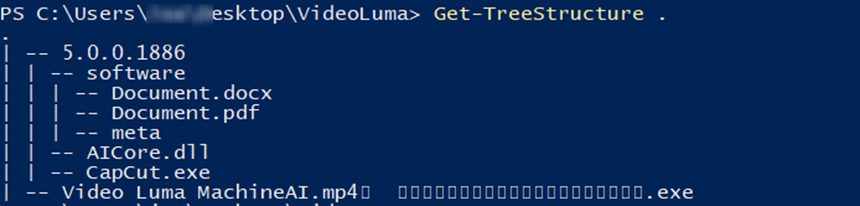
Attackers used Facebook to promote AI generated ads to lure users to a malicious website. The ad claimed to convert still images into vivid videos. After the fake progress bar reached 100%, users got a downloadable ZIP archive, which containd the following:

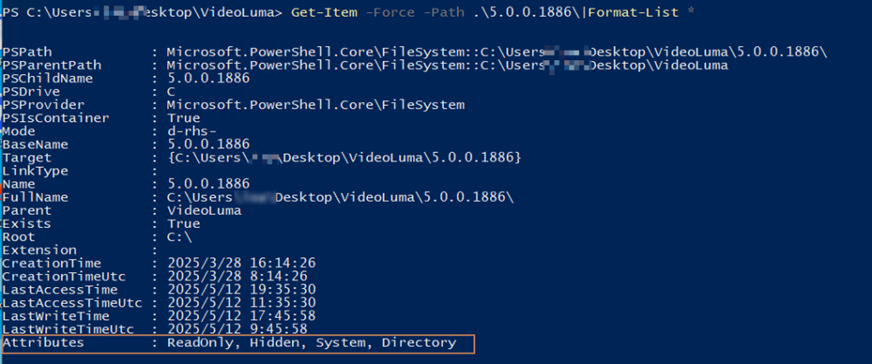
Among the contents was an executable file deceptively named “Video Luma MachineAI.mp4.exe”, multiple Unicode no-break space characters (\xe2\xa0\x80) were used between .mp4 and .exe to impersonate a video file. The folder 5.0.0.1886 had both system and hidden attributes, making it invisible by default in file explorers.

When the user double-clicks the .exe file, it runs “Capcut.exe” located in the 5.0.0.1886 directory and then exits the current process.

“CapCut.exe” is a .NET executable. Upon running, it repeatedly accesses “https[:]//google.com”, then briefly pauses. It then proceeds to rename files in the 5.0.0.1886\software directory, meta becomes “image.exe” and Document.docx becomes install.bat. The renamed image.exe is actually WinRAR, and install.bat is then executed.

The batch script decodes Document.pdf into ppIuqewlq.rar, which is silently extracted using “image.exe” into %LOCALAPPDATA%\SoftwareHost, with the extraction password being TONGDUCKIEMDEVELOPER2025. The extracted content includes a Python runtime environment and its dependencies. The file srchost.exe is essentially “python.exe”:

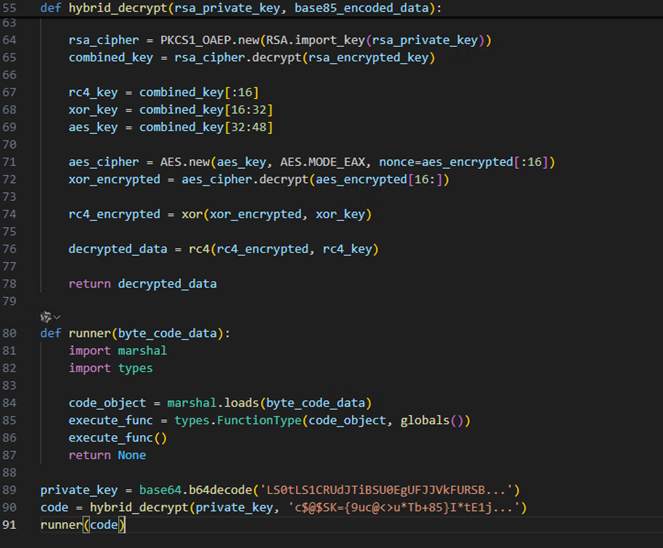
Using srchost.exe, the malware downloads and executes remote code. The downloaded script uses exec() to execute a marshaled (serialized) Python object. The marshaled object is then decompiled for analysis:

The disassembled opcodes amount to over 60,000 lines, but most are garbage instructions designed to hinder analysis. The meaningful opcodes are in the last 500 lines. To facilitate analysis, AI tools are used to reconstruct the original Python code from these opcodes.

Although the AI-reconstructed code might differ from the original, it provides a helpful base for manual verification. Eventually, another marshaled object is uncovered, and the same decompilation method is applied to retrieve its source code.

The final code carries out data theft, targeting: Browser cookies, Browse history and saved credentials, Stored credit card information, Facebook login credentials and account data:

All stolen data is archived and sent to a Telegram bot before being deleted from the victim machine.

BlackLock Ransomware Deep Dive: A Cross-Platform, Double Extortion Threat

Malicious File Summary

Malware FamilyBlackLock
Release DateFebruary 25, 2025
Threat TypeRansomware
Brief DescriptionBlackLock ransomware (also known as El Dorado or Eldorado) emerged in March 2024 and operates under a Ransomware-as-a-Service (RaaS) model. It employs a double extortion strategy—encrypting data and stealing sensitive information—and targets Windows, VMware ESXi, and Linux environments. Victims span various industries and regions.

Sample Analysis

Summary

The sample requires administrator privilege to execute and must be run via the command line; it does not launch via double-click.

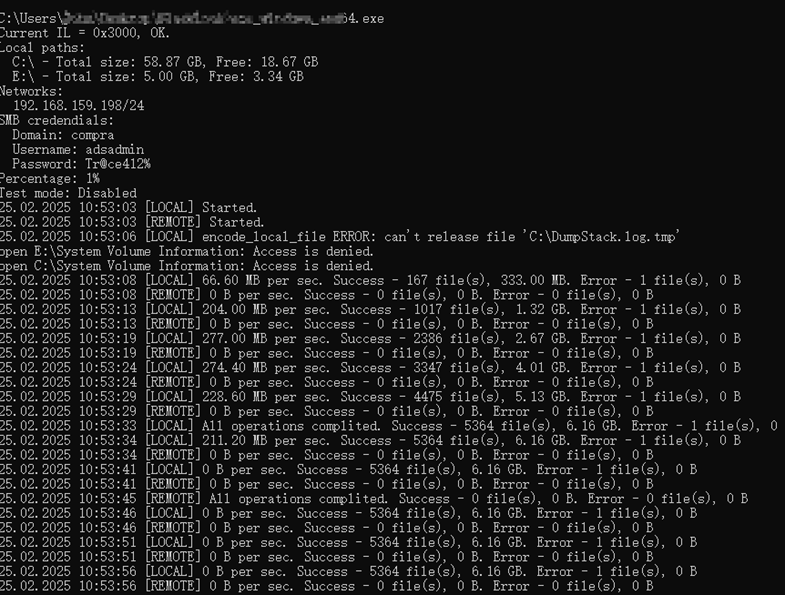
Upon execution, the following log is printed:

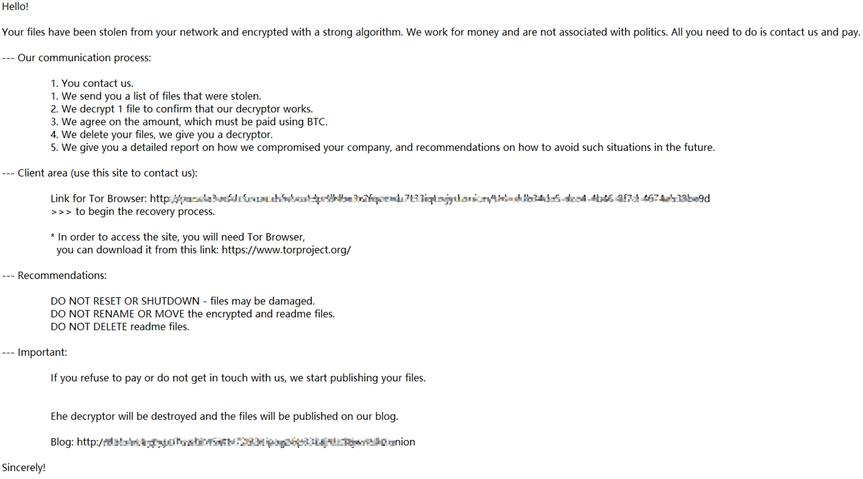
Ransom note content:HOW_RETURN_YOUR_DATA.TXT

Example of encrypted files:

Analysis

Windows Version

Supported optional parameters for execution:

ParameterDescription
-pathSpecifies the file path to be encrypted
-skip-localSpecifies files to be excluded from encryption
-n <subnet>Specifies shared resources in CIDR format, e.g., 192.168.5.0/24
-d <domain>Specifies the domain
-u <username>Specifies SMB account
-p <password>Specifies SMB password
-skip-netSkips encrypting shared directories

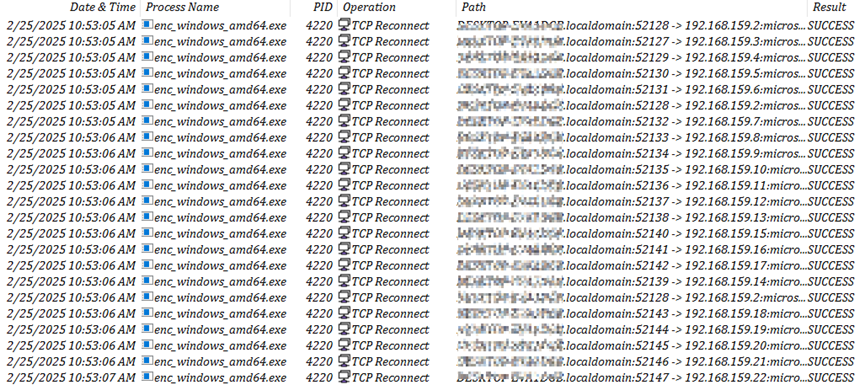
When provided with appropriate user credentials, it can encrypt files on shared networks using the SMB protocol.

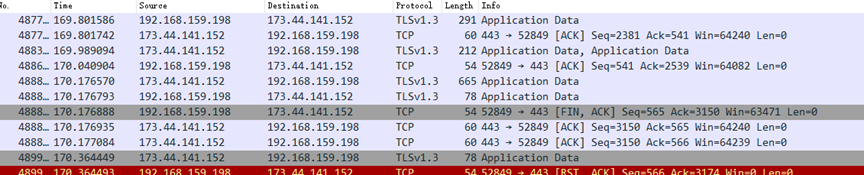
Logs are transmitted via WebSockets to 173.44.141[.]152, with the Origin header set to “http://logger”

To eliminate traces, the Eldorado ransomware runs a PowerShell command to overwrite the encryptor executables with random bytes and then deletes the file. If the “-keep” parameter is specified, this action is skipped:

Linux Version

The Linux variant is simpler, supporting only the -path parameter.

It recursively encrypts files within the specified directory using the same encryption algorithm as the Windows version.

Indicators of Compromise (IOC)

SHA256 windows1375e5d7f672bfd43ff7c3e4a145a96b75b66d8040a5c5f98838f6eb0ab9f27b
7f21d5c966f4fd1a042dad5051dfd9d4e7dfed58ca7b78596012f3f122ae66dd
cb0b9e509a0f16eb864277cd76c4dcaa5016a356dd62c04dff8f8d96736174a7
0622aed252556af50b834ae16392555e51d67b3a4c67a6836b98534a0d14d07d
8badf1274da7c2bd1416e2ff8c384348fc42e7d1600bf826c9ad695fb5192c74
SHA256 Linuxb2266ee3c678091874efc3877e1800a500d47582e9d35225c44ad379f12c70de
dc4092a476c29b855a9e5d7211f7272f04f7b4fca22c8ce4c5e4a01f22258c33
Malicious IP173.44.141.152
Ransom Note FilenameHOW_RETURN_YOUR_DATA.TXT
Encrypted File Extensions.63npoxa6、.00000001
Dark Web URLshttp://dataleakypypu7uwblm5kttv726l3iripago6p336xjnbstkjwrlnlid.onion
Dark Web URLshttp://panela3eefdzfzxzxcshfnbustdprtlhlbe3x2fqomdz7t33iqtzvjyd.onion/Url=ddb34da5-dce4-4b46-8f7d-4674ab38be9d
Commandlinevssadmin delete shadows /all /quiet
Directories Excluded from EncryptionWindows, programdata, program files, program files (x86), $recycle.bin, all users, winnt, appdata, application data, local settings, boot
Files Excluded from Encryptionntldr, ntdetect.com, autoexec.bat, ntuser.dat, ntuser.dat.log, iconcache.db, bootsect.bak, bootfont.bin, bootmgr, thumbs.db
File Extensions Excluded from Encryption.00000001, .exe, .dll, .sys, .msi, .ini, .inf, .lnk,.63npoxa6

Recap of the Largest Ransomware Attacks in 2024

Hackers focused their efforts on ransomware in 2024, leading to a surge in ransom demands. “With nearly 439 million dollars paid out globally just in the first half of 2024 to ransomware operators, this number is expected to double by the end of the year.”

Preventing ransomware starts with monitoring all critical enterprise hosts, applications, devices, and databases for suspicious activity. Leveraging managed detection and response (MDR) services from ForeNova empowered the enterprise with a partner who is an expert in recognizing very early signs of ransomware and leveraging automated incident response to contain the attack before lateral propagation.

Interested in learning more about ForeNova’s NovaMDR service?

Click here to schedule a demo of this incredible service.

What Were the Top Ransomware Attacks in 2024 Globally?

Global financial institutions, national healthcare providers, and local manufacturers became ransomware victims in 2024. Hackers also exploited DeFi and smart contract platform vulnerabilities using email phishing to embed ransomware within the hosts, impacting the blockchain security model.

Another significant contribution to the rise in ransomware in 2024 continued with hackers adopting more adversarial artificial intelligence (AI) and machine learning (ML). Hackers leveraged AI to create well-crafted email phishing attacks, resulting in credential theft, malware embedding on host machines, and data exfiltration.

In 2024, there continued to be many ransomware attacks globally, with the average ransom amount per incident and total payout rising significantly.

1. VOSSKO – German Food Processing

VOSSKO was targeted with ransomware that encrypted its internal systems and databases. Although some operational processes were disrupted, the impacted operational technology systems and production were restored.

Following the incident, the internal IT team and several external experts collaborated to address the situation. Shortly after, the police and State Criminal Police Office, IT specialists, and forensic scientists also participated in the attack investigation.

2. Japan Port of Nagoya

“The ransomware attack on Japan’s busiest port encrypted vital data, disrupting operations and severely impacting cargo handling and customs processes, leading to shipment delays and a ripple effect in international trade.”

This port also suffered a similar cyberattack in 2013.

3. CDK – North American Car Dealerships

CDK Global, a primary software provider for North American car dealerships, was hit by a BlackSuit ransomware attack, forcing dealerships to revert to manual processes for sales.“

This ransomware attack impacted registrations and transactions, along with disclosing customer information, including addresses, social security numbers, and financial data. The attack cost dealers across the country millions in lost car sales, along with countless lawsuits from dealerships against CDK.

Ultimately, CDK Global paid a $25 million ransom in cryptocurrency to gain access to their files.

4. Indonesia National Data Center

“The Brain Cipher ransomware group attacked Indonesia’s National Data Center, disrupting essential government services, including airport immigration processing.”

The incident encrypted sensitive data and halted operations, revealing the vulnerability of national infrastructure to advanced cyber threats. Indonesia, like other developing nations, continues to be a target of global hackers. These developing nations continue to struggle to upgrade their national and local computer systems with updated cybersecurity tools.

5. Latitude Financial Services – Australia

“Attackers stole 14 million records from Latitude Financial, including sensitive data.”

 The company refused to pay the ransom, following Australian policies, believing it wouldn’t guarantee data recovery and could lead to more attacks. They focused on system restoration, customer outreach, and improving cybersecurity. Latitude did recover their data without having to pay the ransom.

6. Global Non-Profit Organization Easter Seals Supporting Orphans

A non-profit, Easter Seals, supporting orphans, was hit by ransomware, encrypting sensitive files like children’s photos and medical records. The attackers initially demanded a crippling ransom but reduced it upon realizing the organization’s non-profit status.

7. UK Military

“Cybercriminals breached the UK Ministry of Defence’s payroll system, compromising the sensitive personal information of 270,000 current and former military personnel.” Like attacks against the United States security clearance database system, UK military personnel’s home addresses, ID numbers, and other information became disclosed in this breach.

What Countries Faced the Most Impactful Ransomware Attacks in 2024?

Ransomware is a global cybersecurity problem. Several countries continue to report increases in ransomware attacks. Here is a breakdown of what countries faced the most ransomware attacks in 2024.

In 2024, Europe experienced a 64% YoY increase in ransomware attacks, followed by Africa at 18%, while North America remains the hardest hit with 59%.”

Germany

“The BSI report highlights critical trends in Germany’s cybersecurity. Between mid-2023 and mid-2024, an average of 309,000 new malware variants were found daily, a 26% rise from the prior year.”

France

In 2024, 74% of organizations in France faced a cyberattack, down 11% from the prior year. In 2023, 97% of those affected restored their encrypted data.

Italy

According to data from Disline, based on the Clusit 2024 report, Italy experienced many ransomware attacks in 2024. There were 310 severe attacks, representing an increase of 65% compared to 2022, accounting for 11% of global attacks.

Key points about ransomware attacks in Italy in 2024:

  • The overall number of severe attacks: 310
  • Percentage of global attacks: 11%
  • The increase compared to 2022: 65%

Africa

Ransomware and digital extortion are on the rise, with over half of African member countries reporting attacks against their critical infrastructure.

“1 out of every 15 organizations in Africa experienced a ransomware attempt weekly during the first quarter of 2023. This is even higher than the global weekly average.”

African member countries have taken positive steps to enhance their resilience to ransomware attacks. However, persistent challenges remain, notably in reporting attacks and paying ransoms.

What Sectors Were Impacted the Most by Ransomware in 2024?

Ransomware impacts every industry worldwide. Here are the top five industries affected the most by ransomware.

1. Government

In 2024, government agencies were the top target for ransomware attacks, often due to threats from nation-states or the sensitive data they handle. As providers of essential services for communities and governments, disruptions in this sector can significantly impact public safety and national security.

2. Healthcare

“In 2024, healthcare organizations faced over 240 attacks and often paid 111% of the ransom demanded.”

This sector saw an increase in attacks from 60% to 67% even with the industry spending close to $125 billion from 2020 to 2025 on cybersecurity defensive tools.

3. Education

“The education sector has experienced a significant rise in ransomware attacks, with a 70% surge in 2023.” In 2024, it remains a top target, totaling 195 attacks, which includes a 105% increase against K-12 and higher education.

4. Manufacturing

Manufacturing faced over 160 attacks, with 67% able to negotiate ransom payments down. However, 74% of these attacks involved data encryption.

5. Energy

The energy sector is essential to national infrastructure, making it a high-value target that has faced 35 attacks, accounting for 67% of all ransomware incidents since 2023.

What Impact Did Ransomware-as-a-Service (RaaS) Have in 2024?

Like IT outsourcing, hackers will use Ransomware-as-a-Service (RaaS) providers to help execute their attacks. They will pay for these services using cryptocurrency. Many RaaS were behind many of the top attacks in 2024. LockBit, Darkside, REvil, Ryuk, and Hive are some of the top RaaS gangs globally. They were responsible for the U.S. Colonial Pipeline attack, JBS USA, Microsoft, and the attack on the Costa Rican Government.

The Future of Ransomware in 2025

The geopolitical landscape of 2024 continues to be shaped by the armed conflicts between Russia and Ukraine and Israel and Hamas. Cybercriminals are exploiting these situations, causing significant international repercussions. These conflicts have turned cyberspace into a battlefield, merging cyber tactics with traditional military actions, heightening tensions, and expanding the damage.

The Russia-Ukraine war has utilized hybrid techniques, with both sides employing hacktivism and cyberattacks to shape geopolitical outcomes. Pro-Russian and pro-Ukrainian groups have targeted governments, businesses, and individuals supporting their adversaries.

What is the Role of MDR in Addressing the Rise in RaaS Coming in 2025?

Global, regional, and local organizations have much in common regardless of industry. They all become ransomware victims, partially due to a lack of qualified cybersecurity engineering talent. MDR providers like ForeNova deliver several security operations (SecOps) service offerings to help these organizations with several critical functions:

  • 24×7 continuous monitoring
  • Automated incident response with 3rd party integration
  • Monitoring endpoint devices
  • Assisting with compliance reporting
  • Futureproofing with continuous investment in new tools and capabilities

Another challenge for these organizations is accessing sustainable budgets to handle cyberattack growth. MDR offerings are cost-effective and relieve numerous capital expenditures through their services model.

Why ForeNova?

Experience across industries and global threats, including ransomware, phishing, and credential theft. NovaMDR by ForeNova provides services across the European Union (EU) and other geolocations.

Interested in learning more about NovaMDR? Click here to schedule an initial consultation today!

Effective Cybersecurity Strategies for Healthcare Institutions

Recent statements by the United Nations Surgeon General to the Security Council have raised concerns about the current state of cybersecurity in hospitals. He stated that ransomware attacks against hospitals and health systems could be “a matter of life and death” and pose a serious threat to international security. Several delegates called for international cooperation to address one of today’s most destructive cyber threats. According to IBM’s Cost of a Data Breach 2024 Report, the healthcare industry has topped the list of the most expensive industries to recover from a data breach for 14 consecutive years, with an average cost of $9.77 million. These are signs that hospitals need to implement a comprehensive cybersecurity strategy and continually improve the security awareness and technical skills of their staff to meet these ever-emerging challenges.

Major Cyber Threats to Modern Hospitals

Ransomware

Ransomware is a type of malware in which an attacker blocks access to a device and its stored data by encrypting files and then demands a ransom from the organization in exchange for decryption. Ransomware attacks in healthcare are one of the most common cyberattacks that not only affect the normal operations of hospitals but can also jeopardize patient safety. Ransomware attacks in healthcare rise from 60% in 2023 to 67% in 2024. And according to Microsoft’s latest annual Digital Defense Report, July 2023 through June 2024 (Microsoft fiscal year 2024), 389 healthcare organizations in the U.S. suffered from ransomware attacks that resulted in network shutdowns, systems going offline, delays in critical medical procedures, and rescheduling of appointments, among other consequences.

Data Breach

Healthcare data systems often contain a large amount of sensitive information within them, including patients’ personal health information (PHI), financial data, medical records, and more. Once this data is compromised, it can lead to serious privacy violations and identity theft.

There is no denying that digital record-keeping has many advantages over traditional paper-based methods of retention. While technology has evolved, hospitals have reduced the potential for system intrusion, unauthorized data access, and disclosure by adopting and more accurately tracking electronic devices, as well as more widespread use of data encryption. However, the ever-increasing number of hacking incidents has led to a continued upward trend in the number of data breaches occurring over the past 14 years. And we can see that the number of data breaches is not only increasing but getting worse.

Social Engineering Attack

Attacks in which the attacker obtains sensitive information through deception, such as phishing and phone impersonation, may also pose as a trusted entity to trick hospital staff into providing login credentials or other sensitive data. Technically speaking, social engineering is not an attack technique, it is more of a “trick,” and because it focuses on people’s psychology and behavior, it has a very high success rate—after all, everyone can make a mistake, and people are the most vulnerable part of security measures. Although the victim will usually doubt the authenticity of the email or phone call, because the attacker carefully designed a complete attack process, so often people will make the wrong judgment and disposition.

Impact and Consequences of Cybersecurity Threats on Hospitals

Data Breach

Internal healthcare systems contain a lot of sensitive personal information, and any inappropriate access to these systems puts the privacy of patients and healthcare workers at risk.

Service disruptions

Hospital cyberattacks can cause emergency systems to crash, affecting the timely treatment of emergency patients, as well as compromising appointment systems and exam equipment, forcing appointments and exams to be postponed and affecting patients’ treatment plans.

Financial losses

Ransom payments and post-data recovery and maintenance costs.

Reputational damage

A sustained cybersecurity incident can diminish the public’s perception of the hospital’s credibility, and relationships between some partners may be impacted.

Legal Liability

Hospitals can face stiff fines and lawsuits for data breaches and are required to comply with relevant data protection regulations; for example, in Germany, healthcare organizations must comply with HIPAA, GDPR, Nis2, and the German Patient Data Protection Act (PSDG), and any breaches can lead to lengthy compliance reviews and corrective actions.

Why Hospitals Are High-Frequency Targets for Cyberattacks

Massive amounts of sensitive data

For hackers, hospital systems store large amounts of sensitive information of great value, including patients’ names, addresses, social security numbers, medical history, diagnostic information (HPI), and more. Whether it’s obtained illegally and sold on the dark web or ransomed to hospitals for a high ransom, the healthcare industry is increasingly becoming a target for attack.

Aging IT systems

Hospital IT systems handle large amounts of sensitive information, yet due to a lack of up-to-date security patches and updates, older IT systems are susceptible to cyberattacks and virus infections. In addition, these old systems are not compatible with modern and emerging cybersecurity tools or technologies.

IT staff challenge and inadequate training

Unlike Internet companies or manufacturing industries with specialized IT teams, hospitals typically lack specialized, qualified IT talent, making it difficult to respond to increasingly complex cybersecurity threats. And with hospital staff scrambling to save lives, budget, resource, and time constraints mean that all healthcare professionals are unlikely to be well versed in cybersecurity best practices. As a result, awareness and training on cybersecurity are not sufficient, and phishing emails may be accessed inadvertently or compromised by malware, which is a major reason why hospitals are becoming targets of cyberattacks.

Unwilling compromises fuel attacks on hospitals

When facing cyber extortion, some hospitals choose to pay the ransom to recover their systems and data as soon as possible. Indeed, this practice can solve the problem temporarily, but it neglects the long-term network security construction, and the system still has vulnerabilities and risks. Most importantly, this practice sends a signal to hackers that “ransom works,” which undoubtedly encourages the emergence of more similar attacks. And hospitals may also be classified as ‘soft targets’ by hackers after a compromise, thus becoming one of the main targets for future attacks.

Medical Device Networking

Today’s vast network of connected medical devices significantly improves the efficiency and quality of healthcare delivery, as these devices not only monitor a patient’s health status in real time but can also be controlled and adjusted remotely. Yet this connectivity also poses significant challenges. For example, patient information stored on medical devices can be accessed without authorization, and these devices can be remotely accessed and controlled by attackers who can even tamper with the transmitted data.

Best Practices for Hospital Cybersecurity

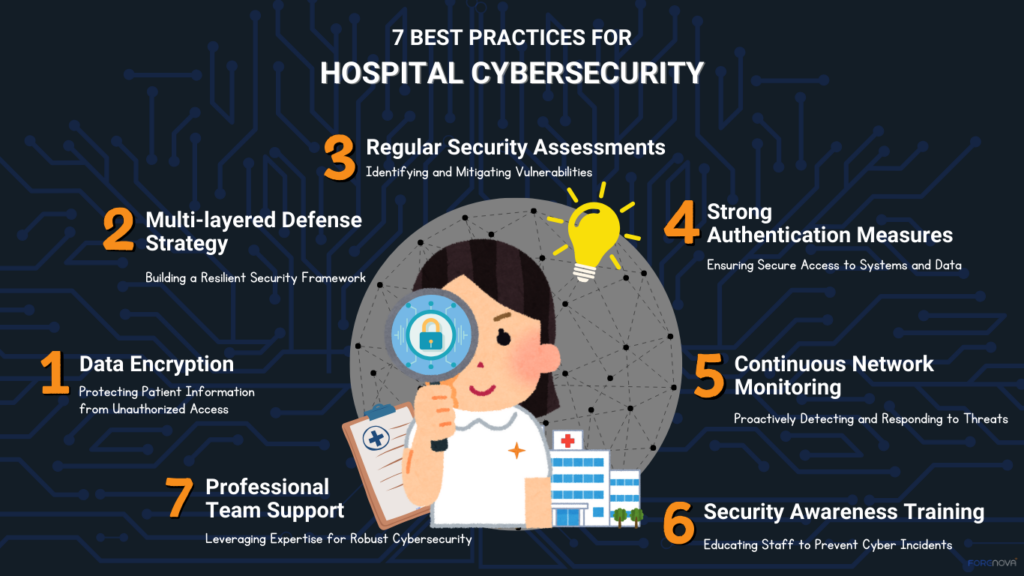
  1. Data Encryption: To better protect against data interception and tampering during transmission, hospitals should ensure that all data is encrypted during transmission.
  2. Multi-layered defense strategy: Hospitals should establish a defense-in-depth strategy that includes the use of multi-layered security controls such as firewalls, intrusion detection systems, and encryption to comprehensively protect hospital network security.
  3. Regular Security Assessments: Hospitals should conduct regular security assessments to identify and fix vulnerabilities and potential risks in their networks.
  4. Strong Authentication Measures: Use Multi-Factor Authentication (MFA) to improve system security by ensuring that only authorized personnel have access to sensitive information.
  5. Continuous Network Monitoring: Continuously monitors network traffic, detects and responds to suspicious activity in real time, ensuring that security threats are detected and addressed in a timely manner.
  6. Security Awareness Training: Hospitals should conduct regular security awareness training for their staff to prevent security accidents due to human error and to improve the overall security preparedness.
  7. Professional team support: Hospitals should remain sensitive to emerging technologies and introduce new security tools and solutions like NovaMDR in a timely manner to continuously improve their network protection capabilities.
cybersecurity for healthcare 7 best practices

Cybersecurity is not static but needs to be constantly improved and updated to address the changing threat landscape. ForeNova team has a wealth of experience and expertise in the field of cybersecurity, and we are able to customize cybersecurity strategies that are best suited to the specific needs of different hospitals. And NovaMDR can provide healthcare organizations with 7×24 comprehensive cybersecurity solutions and compliance guidance to ensure that hospitals comply with various regulations while protecting sensitive data and systems.

Contact our team of professionals today and start protecting your organization from cyber threats today.

Ransomware Trends and Solutions For 2024

According to the 2023 Verizon Security Report, ransomware became involved in 24% of all cyber breaches. Ransomware attacks no longer affect one aspect of an organization. Legacy ransomware focusing on encrypting files for ransomware caused minimal to substantial damage to organizations. Modern-day ransomware impacts far more than previous attacks. In 2023, German companies faced cyberattacks like ransomware malware, password attacks, and phishing. 31% of businesses were affected, with CEO fraud being the least common attack.

Continue reading “Ransomware Trends and Solutions For 2024”

Immer up to date!

Abonnieren Sie unseren Newsletter und erhalten Sie wertvolle Branchen-Insights, Produkt-Updates und aktuelle Analysen von ForeNova direkt in Ihr Postfach.

Wir verwenden Brevo als unsere Marketing-Plattform. Indem Sie das Formular absenden, erklären Sie sich einverstanden, dass die von Ihnen angegebenen persönlichen Informationen an Brevo zur Bearbeitung übertragen werden, gemäß den Datenschutzrichtlinien von Brevo.